

Engineering
Flutter vs React Native: Choosing a Cross-Platform Stack
Both ship to Android and iOS from one codebase. The decision usually comes down to your team and how custom the interface needs to be.
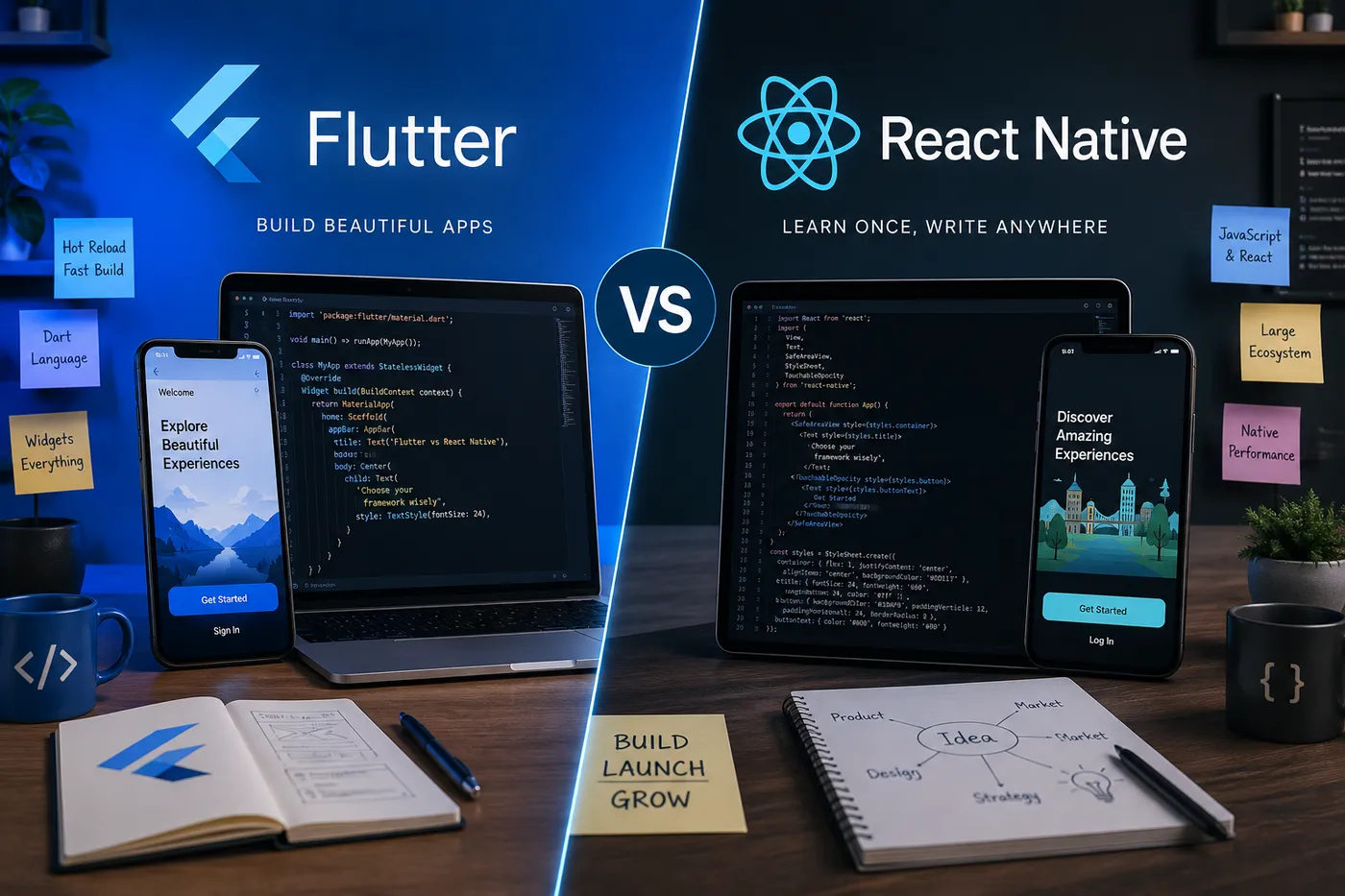
There is no universally correct answer here, which is why the argument never ends. There is usually a correct answer for a specific team and a specific product.
Where Flutter fits
Flutter draws its own widgets, so a heavily branded or highly animated interface looks identical on both platforms. If the design is custom and motion matters, this is the shorter path.
Where React Native fits
React Native renders real platform components and shares a language with the web. If your team already writes JavaScript, or you want an interface that feels native by default, it is the cheaper hire and the faster start.
What actually decides it
The team you have, how custom the interface is, and which native integrations you need. We also use Kotlin Multiplatform when the business logic must be shared but each platform deserves its own native interface.